
New Temporary Skill Shortage (TSS) visa for Australia in March 2018

 On 18 April 2017, the Australian Government announced that the Temporary Work (Skilled) visa (subclass 457) will be abolished and replaced with the completely new Temporary Skill Shortage (TSS) visa in March 2018.
This change has now officially happened. Here’s what you need to know about the TSS visa:
Two main visa streams
There are two main streams available under the new TSS visa program:
- Short-term stream: For employers to source genuine temporary overseas skilled workers in occupations included on the Short-term Skilled Occupation List (STSOL) for a maximum of two years. This can be extended to four years in cases where an International Trade Obligation applies.
- Medium-term stream: For employers to source highly skilled overseas workers to fill medium-term critical skills in occupation included on the Medium and Long-term Strategic Skills List (MLTSSL) for up to four years, with eligibility to apply for permanent residence after three years.
There is also a Labour Agreement stream for exceptional cases where standard visa programs are not available and there is a demonstrated need that cannot be met in the Australian labour market.
TSS visa requirements
The TSS visa program comes with new requirements, including but not limited to:
- Tightened English language requirements.
- A requirement for visa applicants to have at least two years’ work experience in their skilled occupation.
- Mandatory labour market testing, unless an International Trade Obligation applies.
- Capacity for only one onshore visa renewal under the Short-term stream.
- Capacity for visa renewal onshore and permanent residence eligibility after three years under the Medium-term stream.
- A non-discriminatory workforce test to ensure employers are not actively discriminating against Australian workers.
- A requirement to pay a contribution to the Skilling Australian Fund (subject to legislation passing).
Call us if you’d like to chat about the Temporary Skill Shortage (TSS) visa
If you have questions about the TSS visa, or would like to find out if you qualify, you are more than welcome to call us on +27 (0) 11 234 4275. Our consultants are able to answer your questions and can do a comprehensive eligibility assessment.
- Published in News, Our latest posts
Australia announces brand-new visa scheme

 The Australian government has announced that they will create a new visa scheme, the Global Talent Scheme. This scheme will make it easier for highly-skilled migrants to come to Australia.
Here’s what we know
The Global Talent Scheme will include two visas:
- One visa for established businesses.
- Another visa for start-ups operating in STEM fields (Science, Technology, Engineering and Mathematics).
Both visas will require the migrant to have at least three years of relevant experience while the sponsor companies must be able to demonstrate efforts to hire Australians first.
Number of visas per visa category:
There will not be a cap on the overall number of visas, but individual companies will have a limit on the number of migrants that can be employed:
- Established businesses will be able to employ up to 20 skilled migrants per year.
- Starts-ups in STEM fields will be able to employ up to 5 migrants per year.
Salary requirements:
Migrants joining established companies must earn a minimum annual salary of AUS$180 000, while migrants joining STEM start-ups must have minimum annual earnings at the market salary rate. The latter can include equity, but must have a cash component that is no less than the Temporary Skilled Migration Income Threshold which is AUS$53 900.
Other migrant requirements:
Should you wish to apply for this visa, you’ll have to meet certain health, character and security requirements. In addition:
- You may have no familial relationship with the directors or shareholders of the company that wants to sponsor you.
- Your qualifications must be commensurate with the highly skilled role.
- You must possess the capacity to pass on skills to Australians and to develop Australians.
Residency:
Migrants will have the option of a transitional pathway to permanent residence after three years in Australia.
Company requirements:
The most critical requirement ask of established businesses is that the company must be publicly listed or have an annual turnover of at least AUS$4 million for each of the past two years. This financial criteria is to be determined in consultation with stakeholder for STEM start-ups.
When is the Global Talent Scheme coming into effect?
The details of the scheme will be ironed out over the next few months before a 12-month pilot begins on 1 July.
- March 2018: Announce policy intent and direction.
- April-June 2018: Refine initial settings in consultation with industry and other stakeholders.
- July 2018-June 2019: Pilot the Global Talent Scheme.
Our advice
You won’t be able to take advantage of the Global Talent Scheme, or be assessed for either visa, until 1 July when the pilot programme is launched. We’ll send a reminder in our July newsletter.
In summary
The Global Talent Scheme will offer highly-skilled migrants the opportunity to work for established companies or STEM start-ups. It’s a fantastic opportunity for the right candidates and could lead to permanent residency after just 3 years in Australia.
- Published in News, Our latest posts
News: South Australia High Points Category quota notification

 The South Australia Government made two announcements regarding the High Points Category on Monday, 19 February 2018. These announcements related to applications and detailed changes to occupations available for nomination under the High Points Category.
High Points Category quota
Immigration South Australia has received a high volume of applications for the High Points Category and will be monitoring applications received over the coming weeks.
The following steps will be taken:
- Once the ‘high points’ category quota is close to being reach, the minimum points requirement will be automatically increased to 90 points.
- Once the quota is reached, the ‘high points’ category will be closed for the rest of the 2017/2018 program year (until 30 June 2018). Notification of this closure will be posted on their website.
Occupations no longer available for nomination under the High Points Category
From today, 19 February 2018, the occupations listed below are no longer available for nominations under the High Points Category (This applies to applications submitted on or after 19 February 2018)
- 132211 Finance Manager
- 221111 Accountant (General)
- 221112 Management Accountant
- 221113 Taxation Accountant
- 221213 External Auditor
- 222112 Finance Broker
- 222199 Financial Brokers nec
- 222211 Financial Market Dealer
- 222299 Financial Dealers nec
- 222311 Financial Investment Adviser
- 222312 Financial Investment Manager
- 225113 Marketing Specialist
Please note: The other three categories for accessing the SSL and Special Conditions occupations will still be available for applications.
Questions?
If anything about the information above is unclear, please feel free to contact us. Our advisors will be happy to assist.
- Published in News, Our latest posts
Must-read: Australian immigration changes for January and February 2018

 A number of Australian immigration changes that you should know about were made at the start of 2018. Specifically, changes to the list of eligible skilled occupations and South Australia’s High Points category.
1. Eligible skilled occupation changes
On the 17th of January, the Australian Department of Home Affairs made official changes to occupations that appear on the Short-term Skilled Occupations List (STSOL) as well as the Medium and Long-term Strategic Skills List (MLTSSL).
This includes occupations that has been:
- Added to the lists of eligible skilled occupations;
- Moved between the STSOL and MLTSSL for particular visa programs; and
- Removed from the lists of eligible skilled occupations.
Occupations added to the list
The three occupations below has been added to the STSOL:
- Property Manager
- Psychotherapist
- Real Estate Representative
Occupations moved between lists
The occupations below has been moved from the STSOL to the MLTSSL:
- Horse Breeder
- Management Consultant
Occupations removed from the lists
The occupations below has been removed from the lists of eligible skilled occupations for all skilled visa programs:
- Building Associate
- Hair or Beauty Salon Manager
Do these changes affect you?
The changes made by the Department of Home Affairs impact visa applications lodged on or after 17 January. If you lodged an application before this date, your application will not be affected.
2. South Australia’s State Nomination High Points category changes
The State Nomination High Points category has been successful in attracting high quality applicants to South Australia.
On 1 February 2018, South Australia’s High Points category increased to 85 points.
What does this mean?
Applicants who can achieve 85 points or higher (including state nomination points) in their points test can gain access to the Supplementary Skilled List (SSL) and occupations on the State Nominated Occupation List. Applicants must meet all other South Australian state nomination requirements to qualify.
Important to note…
Quotas apply to nominations in the High Points category. Once this quota is reached, applications under this category may be closed for certain occupations.
Book an assessment to see if you qualify
To find out if you qualify for South Australia’s High Points category, simply book an assessment with one of our immigration agents. Should your assessment show that you do qualify, we’ll explain how we can help you and make your dreams of moving to Australia a reality.
- Published in News, Our latest posts
Interested in Australian skilled nomination? Here’s a breakdown of the territories
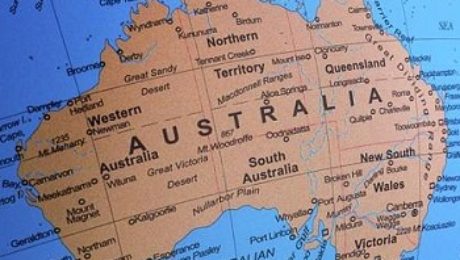
 The Australian skilled nomination program is available across the country’s eight territories:
- Australian Capital Territory (ACT)
- New South Wales (NSW)
- Northern Territory
- Queensland
- South Australia
- Tasmania
- Victoria
- Western Australia
To qualify for the program, you must appear on a territory’s skilled occupation list and meet the criteria of the particular territory.
That’s enough information for someone who’s willing to live anywhere. But our guess is that you want a particular lifestyle. You don’t want to uproot your family to a place that’s the opposite of what you’ve imagined all along.
This is where our territory breakdown comes in. We’ve listed all the territories and given you the highlights of each, coupled with the cost of living.
Let’s see if the territory you’re interested in, is the one for you:
Australian Capital Territory (ACT)
The ACT is renowned for offering a lifestyle of sophistication and style. The territory is known as a foodie, wine and arts scene haven, with many galleries and museums across the region.
It just so happens that Australia’s capital city, Canberra, is located within the ACT. The capital has one of the lowest crime rates of any major Australian city and prides itself on being a welcoming community.
Canberra is also the place to be if you like cycling. The city has more than 2 400 kilometres of dedicated bicycle track, trails and lanes which will deliver you to each of the city’s major CBD (Central Business District) areas.
Cost of living
Go here for the cost of living in Canberra.
New South Wales (NSW)
The quality of life in New South Wales is consistently rated among the best in the world!
It doesn’t matter where you choose to live in NSW, in a large city or a small town, you’ll enjoy a modern lifestyle with world-class healthcare and education systems, a relatively low cost of living and mild temperatures.
Don’t forget that Syndey is situated within the NSW territory. It’s the place to be if you like to keep busy!
Sydney offers beaches, parks, shopping, restaurants, a thriving cultural scene and, of course, the Syndey Opera House.
Cost of living
Go here for the cost of living in Sydney.
Northern Territory
Australia’s Northern Territory has Australia’s youngest population with a median age of 31 years old.
This is most likely why the Northern Territory is known to be dynamic and progressive. Don’t assume that equals ‘busy’. In fact, people in the Northern Territory lives life at a relaxed pace.
You might also find it interesting to know that the Northern Territory is Australia’s smallest territory with just over 235 000 people. Yet, there are more than 100 nationalities who live happily together.
Cost of living
Go here for the Northern Territory’s cost of living.
Queensland
Queensland is known as Australia’s Sunshine State. It’s also Australia’s only state with no less than six international airports!
Other reasons you might want to consider Queensland are affordable housing, high quality education, advanced health services, and a modern public transport system.
Cost of living
See the cost of living for Brisbane, Queensland’s capital, here.
South Australia
South Australia is Australia’s most central state and serves as the gateway into the rest of Australia.
Adelaide, the capital, offers super work-life balance and is rated as Australia’s safest city. The city is also one of the most affordable Down Under with the lowest median house prices and rental costs.
Further to this, the state offers long summers, 300 days of sunshine to be exact, with stunning beaches to go with it.
Cost of living
Find Adelaide’s cost of living here.
Tasmania
Tasmania, an island state of Australia, offers rewarding career opportunities, affordable housing, great schools and short commute times.
People in Tasmania also enjoy work-life balance. You can drop your kids off at school in the morning and go for a surf after work. The fact that kids can safely enjoy the outdoors only adds to Tasmania’s appeal.
Cost of living
You can find Hobart’s cost of living here.
Victoria
Victoria is the second-most populous state in Australia, with more than 70% of its population in Melbourne. This might have a lot to do with the fact that Melbourne has been voted the world’s most liveable city many times.
Just like in New South Wales, there is more than enough to keep you busy in Victoria. From one of the world’s most beautiful coastal drives to wineries and wellness retreats.
Another similarity is the mild, temperate climate. You can expect summers to be warm to hot, cool to cold winters and sunny springs.
Cost of living
Go here for Victoria’s cost of living.
Western Australia
This is Australia’s largest state, but its population density is among the lowest in the world.
There is no shortage of immigrants though, with more than 35% of Western Australia’s population born outside of the country. This melting pot of cultures creates a diverse state with a dynamic society.
There is one thing everyone has in common – a love for sport. Playing sport, watching sport and supporting sport is part of daily life in Western Australia for most locals.
During summer, cricket is king, with sailing, surfing, swimming and tennis also being popular. In winter, the Australian Football League takes precedence. Know your teams and you’ll be able to strike up a conversation with just about anyone.
Cost of living
Find Perth’s cost of living here.
Would you like to find out more about Australian skilled nomination itself?
If you do, please feel free to contact us. You’ll hear from us within the hour.
- Published in Life in Australia, Our latest posts, Working in Australia
Did you know we can help with emigration to New Zealand too?

 Many people view both Australia and New Zealand as desired emigration destinations. The common misconception is that emigration to Australia is similar to emigration to New Zealand. However it is not and that’s why Intergate offers our services for both countries.
Here’s how Intergate helps you
Just like with Australia, our licensed immigration advisers start by doing a comprehensive assessment for you to find out if you are eligible for emigration to New Zealand. If you qualify, our advisers also help you compile and submit your application.
Let us remind you that the emigration to Australia and New Zealand are not the same. Each country has its own set of requirements to meet.
The good news is that we can do assessments for both countries at the same time. Our advice is to do it this way, whether you’re interested in both countries or not.
Perhaps you don’t qualify for Australia, but you do qualify for New Zealand. New Zealand is a great country and it could be a fantastic option for your family. At least if you know that you qualify for emigration to New Zealand, you can make an informed decision about where you want to take your family.
We have three licensed immigration advisers!
Immigration advisers for New Zealand has to be licensed and registered with the New Zealand Immigration Advisers Authority in order to offer emigration advice and assistance.
We’re happy to tell you that all three our advisers are indeed licensed and registered. You can read more about them here.
Our New Zealand service offering
Intergate can assist you with a full range of visa and applications for New Zealand:
- Residency applications.
- Work and business visas.
- Skilled migrant visa assessments.
- EOI (Expression of Interest) applications.
- Entrepreneur and Investor visas.
- Family visa applications.
Get in touch to explore emigration to New Zealand
A simple email is all it takes to find out if you are eligible for emigration to New Zealand. Don’t forget that you can get assessed for Australia at the same time. Who knows – you might even qualify for both countries, which will leave you free to decide which option you’d like to pursue.
- Published in News, Our latest posts
How do I get a work visa for Australia?


You’ve done the research and decided Australia is where your family needs to be. Now it’s time to address the next big question – how to get a work visa for Australia.
But you have no idea of what your options are, how the process works or where to start.
Does this sound familiar? We bet it does. We get hundreds of phone calls each month from people who find themselves in this exact situation.
So how does it work when you want to work in Australia, you ask? Here’s what we share with everyone who call us:
You start with an assessment
You must have the right skills and qualifications if you want to work in Australia. Australia wants immigrants who can add value and supply skills the country needs.
That’s why it’s important to start with an immigration eligibility assessment, to find out if your skills and qualifications are in need in Australia.
A comprehensive assessment, done by a licensed immigration agent, will reveal whether or not you qualify to work in Australia, which visa you qualify for, if any, and explain the way forward.
The two available visa categories are:
- Skilled migrant
- Sponsored work
There is a different process for each of these and we explain both below.
Here’s the process for a skilled migrant application
When you qualify for general skilled migration and decide to proceed, the first step is lodging an Expression of Interest.
Your Expression of Interest demonstrates your interest in a specific Australian visa and details:
- The visa subclass and stream you intend to apply for.
- Whether you’re seeking sponsorship from a state or territory government.
- If you are open to residing in specific states or territories.
If your Expression of Interest is accepted by an employer or a state or territory government body, you’ll move on to the next step, which is the Invitation to Apply.
The Invitation to Apply is exactly what the name suggests – an invitation to you to apply for a skilled migrant visa. It will detail all of this information:
- The subclass under which you are being invited to apply.
- The time frame within which you have to make your visa application.
- Any additional information you should include with your application.
The final step is preparing and lodging your visa application.
And here’s how it works if you’re eligible for a sponsored work visa for Australia
There are fewer steps in the process for the employer sponsored category, but don’t make the mistake of thinking it means it’s easier to apply for these visas.
The first step is nomination by an Australian employer. The documentation required will depend on whether you’re applying under the Employer Nomination Scheme or Regional Sponsored Migration Scheme as well as the stream you’re applying under:
- Temporary Residence Transition stream.
- Direct Entry stream.
- Labour Agreement stream.
You’ll move on to the next and final step when the nomination has been accepted – preparing and lodging your application.
Let’s recap…
If you’d like to apply for a work visa for Australia, you must have skills and qualifications needed in Australia. You’ll find out if you if you do by completing an assessment with an immigration agent.
Should you in fact qualify to work in Australia, you can proceed and start the process of your emigration journey. The specific actions you’ll take will depend on whether your qualify for skilled migration or sponsored work.
Our advice? Get the assessment done as soon as you can.
- Published in Immigration to Australia, Our latest posts, Working in Australia
Thinking of applying for Australian citizenship? Now might be the time!

 Back in April, the Australian government tabled a bill to amend the Australian Citizenship Act. If passed, the bill would have made it much tougher for immigrants to get citizenship.
Thankfully, for all hopeful applicants, the bill was effectively struck off the notice on 18 October after the government could not get enough numbers to support the reforms.
However, this isn’t the last we’ll see of this bill. The bill will be reviewed again in July 2018 and that’s why we’re telling you today to apply for citizenship as soon as possible.
What was proposed?
Government wanted to change the citizenship standards in two major ways:
- Immigrants must hold permanent residency for at least 4 years before being able to make an application for citizenship.
- Stricter English Language Test, involving reading, writing, listening and speaking components. It was also proposed that an applicant can only take the IELTS three times.
What are the current requirements for Australian citizenship?
If you make your citizenship application today, you only need to have held 12 months of permanent residency immediately before making an application. The additional requirements are:
- You have lived in Australia on an Australian visa for four years before applying.
- You have not been absent from Australia for more than one year in total, during the four year period, including no more than 90 days in the 12 months before applying.
As for English language capabilities, you only need to demonstrate a basic understanding of English.
Any other requirements?
Yes and these are:
- You are of good character.
- You intend to reside or maintain a close and continuing association with Australia.
- Adequate knowledge of the responsibilities and privileges of Australian citizenship.
Do you really have to make an Australian citizenship application now?
You don’t have to, no, but we strongly advise that you do.
Why would you want to wait four years before you can make your application, if you can do it within 12 months? Remember, four years could become reality next year after the bill has been reviewed!
If you need help determining if you meet the citizenship requirements, please do give us a call on +27 (0) 202 8200. Our licensed agents will be able to assess your eligibility.
Should you qualify, and you decide to apply, our team can also ensure that you application is prepared and lodged correctly.
- Published in News, Our latest posts
Australian Working Holiday visa (subclass 417)

 Going to Australia on a working holiday may be a dream come true. However it is not as simple as it may seem. There are very strict rules and requirements that need to be met in order to successfully qualify for an Australian Working Holiday visa.
What is an Australian working holiday visa?
This visa is suited towards students and young adults who wish to travel the world, and go and work in Australia for up to a year.
How do I know if I am eligible for an Australian Working Holiday visa?
You might be able to get this visa if you:
- Are at least 18 but not yet 31 years of age.
- Have not previously entered Australia on a Work and Holiday (Temporary) visa (subclass 462).
- Hold a valid passport from a country involved in the Working Holiday Program with Australia.
- Are a genuine visitor who wants to have a holiday in Australia.
- Have enough money to support yourself during your working holiday.
- Have enough money to buy a return or onward travel ticket at the end of your stay.
- Will not be accompanied by a dependent child during your stay in Australia.
- Meet certain health and character requirements.
Can I apply for a second Working Holiday visa?
Yes, you may, but only if you meet these conditions:
- You have complied with all the conditions on your first Working Holiday visa.
- You have not previously held more than one Working Holiday visa.
- You have completed three months of specified work in regional Australia while on your first Working Holiday visa.
- You have not yet turned 31 years of age.
What qualifies as ‘specified work’?
The Australian Department of Immigration and Border Control defines ‘specified work’ as ‘work that is undertaken in a ‘specified’ field or industry in a designated regional area’.
The are currently five approved industries for Australian Working Holiday visas:
- Plant and animal cultivation. For instance, harvesting and/or packing of fruit and vegetable crops as well as the manufacturing dairy produce from raw material.
- Fishing and pearling. Here an example would be conducting operations relating directly to taking or catching fish and other aquatic species.
- Tree farming and felling. You could, for instance, fell trees in a plantation or forest.
- Mining. One example of approved work in this industry is oil and gas extraction.
- Construction, of which residential building construction is an example.
Can my family join me on this visa?
As stated above, you cannot have a dependent child join you in Australia on this visa. However, partners may join you but any partner would need to apply for their own visa.
Is there anything else I should know?
You should know how to calculate the time spent working as there is a 3-month requirement and you should know that you must submit evidence of the work done. You can find the information you need on this page. Also included is helpful information on where to find specified work.
If you still have questions, please do not hesitate to contact our team here or on +27 (0) 21 202 8200.
- Published in Immigration to Australia, Short-term Visas
Trade skills needed in Australia URGENTLY

 There is an urgent need for tradespeople in Australia, from motor mechanics to electricians. Check the list below and if you have a trade certificate in any of the mentioned occupations, contact us as soon as possible. You may qualify to submit an application for permanent residence!
Which trade skills are needed?
- Motor Mechanic (general)
- Diesel Motor Mechanical
- Motorcycle Mechanic
- Small Engine Eechanic
- Sheetmetal Trades Worker
- Metal Fabricator
- Pressure Welder
- Welder (First Class)
- Fitter (General)
- Fitter and Turner
- Fitter-Welder
- Metal Machinist (First Class)
- Locksmith
- Panelbeater
- Bricklayer
- Stonemason
- Carpenter and Joiner
- Carpenter
- Joiner
- Painting Trades Worker
- Glazier
- Fibrous Plasterer
- Solid Plasterer
- Wall and Floor Tiles
- Plumber (General)
- Airconditioning and Mechanical Services Plumber
- Drainer
- Gasfitter
- Roof Plumber
- Electrician (General)
- Electrician (Special Glass)
- Lift Mechanic
- Airconditioning and Refrigeration Mechanic
- Electrical Linesworker
- Technical Cable Jointer
- Electronic Equipment Trades Worker
- Electronic Instrument Traders Worker (General)
- Electronic Instrument Trades Worker (Special Class)
- Chef
- Cabinetmaker
Which work visas do these trade skills fall under?
The trade skills on this list are all on the Skilled Independent visa (subclass 189). This is a general skilled migration category and does not require sponsorship. This means you do not need a job offer or state nomination to apply for this visa.
Instead of sponsorhip, the main requirement is that you must score a minimum of 65 points on your assessment in order to submit an Expression of Interest and continue with a visa application.
Contact us to see if you qualify
If you see your occupation on the trade skills list above and you’re interested in moving to Australia, contact us today. Australia is desperate to fill the country’s skills gaps.
Our advice is to book an assessment straight away so that we can get the ball rolling should you qualify. Our agents will contact you the minute we’ve received your details.
Know family or friends that may be interested? Then give them our contact details too!
- Published in News, Our latest posts